A jail is a local lockup, usually run by a county sheriff, that holds people awaiting trial and people serving short sentences, most often a year or less. A prison is run by a state or the federal government and holds people convicted of felonies with sentences longer than a year. To find someone, check the county jail roster first, then the state Department of Corrections search, then the federal Bureau of Prisons locator.
The short answer
People use "jail" and "prison" as if they mean the same thing. They do not. The difference comes down to three questions: who runs the building, what stage the case is at, and how long the sentence is.
Jail is local. A county sheriff or a county corrections department runs most jails. Some large cities run their own. Jails hold people right after arrest, people waiting for trial who have not posted bail, and people serving short sentences.
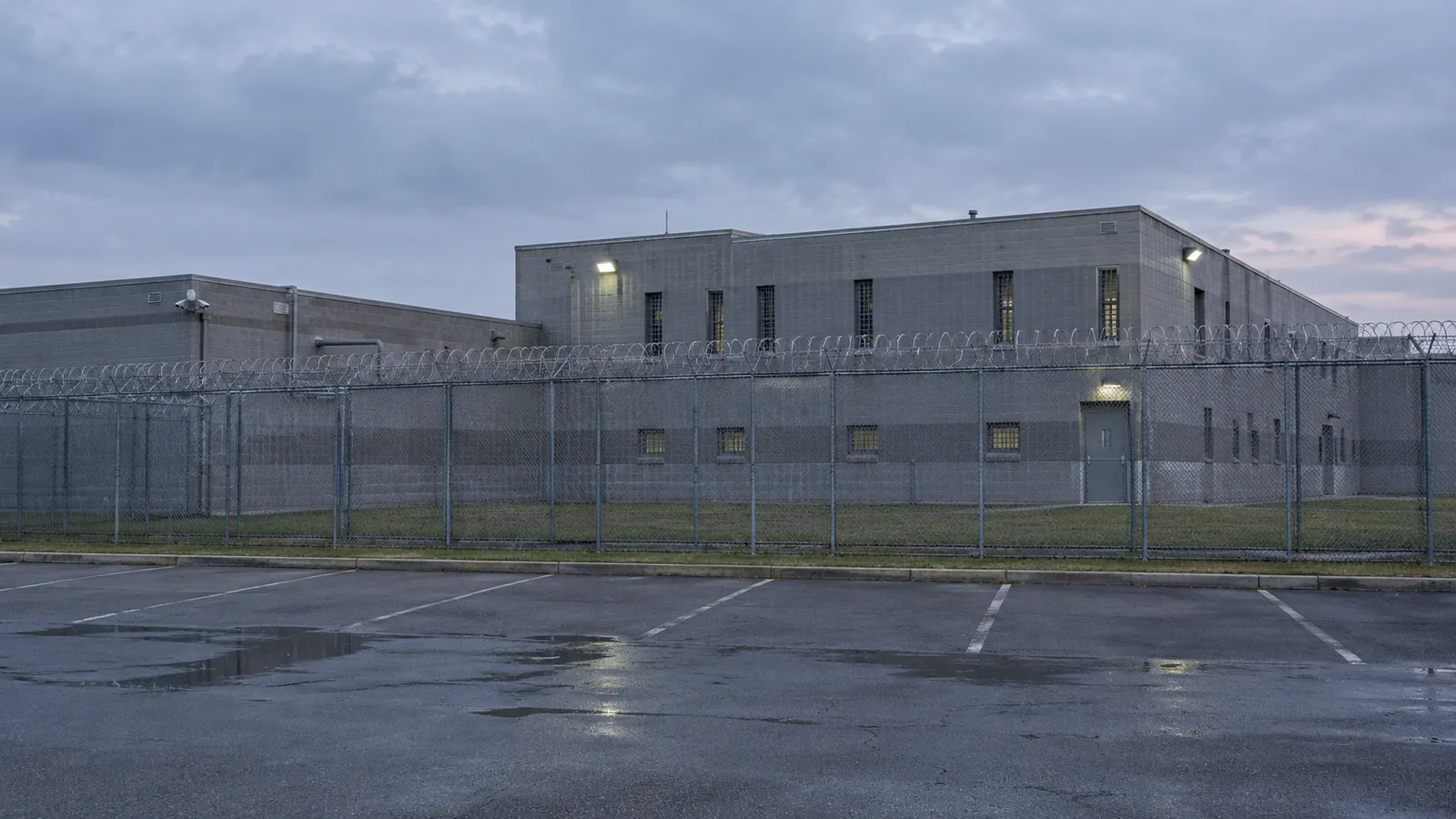
Prison is state or federal. A state Department of Corrections (DOC) runs state prisons. The Federal Bureau of Prisons (BOP) runs federal prisons. Prisons hold people who have already been convicted and sentenced, usually for a felony with a term of more than one year.
The Bureau of Justice Statistics (BJS) uses the same split. It defines a prison as a long-term facility run by a state or the federal government that typically holds people with sentences of more than one year. It defines a jail as a facility usually run by a local law enforcement agency.
Who is held in a county jail
Most people in jail have not been convicted of anything. BJS reports that at midyear 2024, 68% of people in local jails (about 450,700 people) were unconvicted. They were waiting for arraignment, trial or sentencing.
Jails also hold:
• People serving misdemeanor sentences, which in most states top out at one year.
• People arrested on probation or parole violations, waiting for a hearing.
• People held for other agencies. At midyear 2024, jails held about 128,400 people for other jurisdictions, including about 55,600 for state prison authorities and about 41,900 for federal authorities (BJS, Jail Inmates in 2024).
• People held on warrants from other counties or states, waiting to be picked up.
Jails turn over fast. BJS counted 7.9 million jail admissions in 2024 against an average daily population of 667,700. The average stay for people admitted between July 2023 and June 2024 was 31 days. Many people are out within hours or a few days after posting bail or being released by a judge.
Despite the reputation of jails as a place for minor offenses, 76% of people in jail at midyear 2024 were held on felony charges. Many of them are waiting for trial on cases that may end in a prison sentence.
- If someone was arrested in the last few days, they are almost always in the county jail for the county where they were arrested, not in a prison.
- Small towns may hold people in a police lockup for a few hours before moving them to the county jail. Lockups usually do not post online rosters.
Who is held in a state or federal prison
State prisons hold people convicted of breaking state law and sentenced to a prison term. This is most of the prison population. At yearend 2023, there were 1,254,200 people under state or federal prison jurisdiction in the U.S. (BJS, Prisoners in 2023, published September 2025).
Federal prisons hold people convicted of federal crimes, such as federal drug trafficking, fraud, firearms and immigration offenses. BJS reports the federal prison population was 154,093 at yearend 2024, down about 1% from 155,972 a year earlier.
Prisons are sorted by security level, from minimum to maximum. A new state prisoner usually goes first to an intake or reception center for medical screening and classification. The DOC then assigns a permanent facility based on the sentence, the offense, behavior and program needs. That facility may be far from home.
Prisons usually offer more programs than jails, such as GED classes, job training and substance use treatment. The reason is simple: people stay for years, not days, so the system is built for longer stays.
Sentence length: the one-year line and its exceptions
The usual rule: a sentence of one year or less is served in jail, and a sentence of more than one year is served in prison. Many misdemeanor sentences are capped at 364 days or one year for this reason.
That rule has real exceptions, and they matter when you are trying to figure out where someone is:
• California. Since the Criminal Justice Realignment Act took effect on October 1, 2011, many lower-level felonies are served in county jail instead of state prison. These county jail terms can run longer than a year. They are often split into jail time followed by "mandatory supervision" by county probation.
• Massachusetts. Counties run "houses of correction" that can hold sentences of up to two and a half years. Longer sentences go to state prison.
• States that run their own jails. In a handful of states there is no county jail system at all (see the next section).
• State prisoners held in local jails. Some states house sentenced state prisoners in county or parish jails for all or part of their term.
So "more than a year means prison" is a good starting guess, but always check the county roster and the state DOC search before assuming.
States where the state runs the jails
Six states have what BJS calls an integrated system: one state agency runs both the jails and the prisons. They are Alaska, Connecticut, Delaware, Hawaii, Rhode Island and Vermont. BJS counts everyone held in these systems, including people awaiting trial, as prisoners in its prison reports.
In these states, a person arrested last night and a person serving a 10-year term may both show up in the same state DOC inmate search. There is no county sheriff roster to check for most arrests. One note on Alaska: BJS says 14 local jails there are run independently of the state system, so a short-term arrest in a small Alaska town may be held locally first.
West Virginia is a related case. Its 10 regional jails are run by a state agency, the West Virginia Division of Corrections and Rehabilitation, which took over the former Regional Jail Authority in 2018. BJS leaves West Virginia out of its jail counts for this reason. For an arrest in West Virginia, look up the regional jail that serves the county, not a county sheriff.
- If the arrest happened in Alaska, Connecticut, Delaware, Hawaii, Rhode Island or Vermont, start with the state DOC search, not a county roster.
State prisoners held in county jails
A person can be a state prisoner on paper and still sleep in a county jail. States do this to relieve crowding, to save money, or as standing policy. The state usually pays the county a daily rate for each person.
At yearend 2023, about 65,600 people under state or federal prison jurisdiction were housed in local jails (BJS, Prisoners in 2023, Table 14). The practice is heavily concentrated in a few Southern states:
• Louisiana: 14,850 state prisoners in parish jails, or 52.7% of everyone under its jurisdiction. More than half of Louisiana's state prisoners are held in local jails, the highest share in the country.
• Kentucky: 7,967 in local jails, or 41.5%.
• Mississippi: 5,772 in local jails, or 29.6%.
Many states hold almost no prisoners this way. In those states, a sentenced person leaves the county jail as soon as the DOC has room at intake.
For families, this means a person sentenced to the state can stay on a county or parish jail roster for months or years. They will usually also show up in the state DOC search, which may list the local jail as their location.
What happens when someone is transferred from jail to prison
After a judge imposes a prison sentence, the person does not leave right away. The usual steps:
• The court sends the sentencing order (often called a judgment and commitment order) to the state DOC.
• The person stays in the county jail until the DOC schedules pickup. How long this takes depends on the state and on bed space at intake. It can be days or many weeks. The state may pay the county for the time.
• State transport officers move the person to a reception or diagnostic center for medical checks, testing and classification.
• The DOC assigns a permanent prison, which may happen weeks later.
During the move, the person may drop off the county roster before they appear in the state search. A gap of a few days is normal. Phone accounts, commissary money and approved visitor lists usually do not carry over from jail to prison. Expect to set them up again with the new facility and its vendors.
Federal cases work differently. People charged with federal crimes are in the custody of the U.S. Marshals Service before sentencing, and the Marshals often rent beds in county jails. After sentencing, the BOP designates a federal prison and the Marshals handle the transport.
- If the person drops off the county roster after sentencing and is not yet in the state search, wait a few business days and check again, or call the jail and ask whether they were released or transferred.
- Money left on a jail commissary account is usually refunded at release or transfer, often by debit card or check. Ask the jail how it handles balances.
How to find someone in jail or prison
Search in this order. It matches how people move through the system.
County jail roster. For a recent arrest, search the jail in the county where the arrest happened. Most sheriffs post a roster or inmate search with name, booking date, charges, bond and court dates. InmateRoster.net lists county rosters by state. If the person is not there, try neighboring counties, since some counties share a regional jail or rent beds elsewhere.
State DOC inmate search. For someone sentenced to state prison, use the search on the state Department of Corrections website. Most allow a search by name or DOC number and show the current facility, sentence and projected release date. In the six integrated states, this is also where you look for recent arrests.
BOP inmate locator. For federal prisoners, use the Find an Inmate tool on bop.gov. You can search by name or by BOP register number, and its records cover federal inmates from 1982 to the present. A person still awaiting federal trial may not show up there yet. They are often held in a county jail under a federal hold, so check the local roster too.
Immigration detention. People held by U.S. Immigration and Customs Enforcement (ICE) are searched through ICE's own Online Detainee Locator, not the BOP. Some ICE detainees are held in county jails under contract and will appear on the local roster.
- Write down the booking number or DOC number as soon as you find it. Deposits, mail and visit requests almost always ask for it.
- Names are often entered as Last, First, and sometimes with typos. Try a partial last name or a date of birth if the full name does not match.
Visits, calls and money: jail vs. prison
Visits. Many jails use video visits, either from a kiosk in the jail lobby or from home through a paid vendor. In-person contact visits are less common in jails, since most people are there a short time. Prisons usually require each visitor to apply and pass a background check before the first visit. Once approved, prison visits are more often in person, sometimes at a table in a visiting room.
Phone calls. Both jails and prisons use contract phone companies. You usually open a prepaid account with the vendor the facility uses. The vendor often changes when the person moves from jail to prison.
Money. Jails and prisons both let family put money on an account for commissary items like snacks, hygiene products and phone time. Deposits are made online, by phone, at a lobby kiosk, or by money order, depending on the facility. Jails and prisons often use different vendors, so check the current facility's instructions before you send money.
Mail. Rules are set by each facility. A growing number of jails and prisons scan incoming personal mail and deliver copies or digital images instead of the original. Check the facility's mail rules before sending photos or cards.
Common questions
What is the main difference between jail and prison?
Jails are run by counties or cities and hold people awaiting trial and people serving short sentences, usually a year or less. Prisons are run by a state or the federal government and hold people convicted of felonies with sentences of more than one year.
How long can you stay in county jail?
There is no single limit. Someone waiting for trial can stay until the case ends, which can take months or more than a year in a serious case. Sentences served in jail are usually capped at one year, but California allows some felony sentences longer than a year in county jail, and Massachusetts houses of correction hold sentences up to two and a half years. BJS reports the average jail stay was 31 days for people admitted from July 2023 to June 2024.
Is jail or prison worse?
It depends on the facility. Jails often have fewer programs, less outdoor time and more crowding and turnover, because they are built for short stays. Prisons hold people longer and usually offer more classes, work and treatment, but they can be far from home and hold people with longer sentences.
Can state prisoners be held in a county jail?
Yes. At yearend 2023, about 65,600 people under state or federal prison jurisdiction were housed in local jails. Louisiana held 52.7% of its state prisoners in parish jails, the highest share of any state (BJS, Prisoners in 2023). Sentenced people also wait in county jail until the state DOC picks them up.
Which states do not have county jails?
Alaska, Connecticut, Delaware, Hawaii, Rhode Island and Vermont run combined jail and prison systems through a state agency, according to BJS. Alaska also has 14 small local jails run outside the state system. West Virginia's regional jails are run by the state Division of Corrections and Rehabilitation.
How do I find out if someone is in jail or prison?
For a recent arrest, search the county jail roster where the arrest happened. For someone sentenced to state prison, use that state's Department of Corrections inmate search. For federal prisoners, use the Federal Bureau of Prisons inmate locator on bop.gov. For immigration detention, use the ICE Online Detainee Locator.
Sources
- Bureau of Justice Statistics, Jail Inmates in 2024: Statistical Tables (published September 2026)
- Bureau of Justice Statistics, Prisoners in 2023: Statistical Tables (published September 2025)
- Bureau of Justice Statistics, Federal Prisoner Statistics Collected Under the First Step Act, 2025
- Federal Bureau of Prisons, Find an Inmate
- Judicial Branch of California, Criminal Justice Realignment
General information, not legal advice. Laws and court rules differ by state and change; for a specific case, talk to a lawyer licensed in that state.