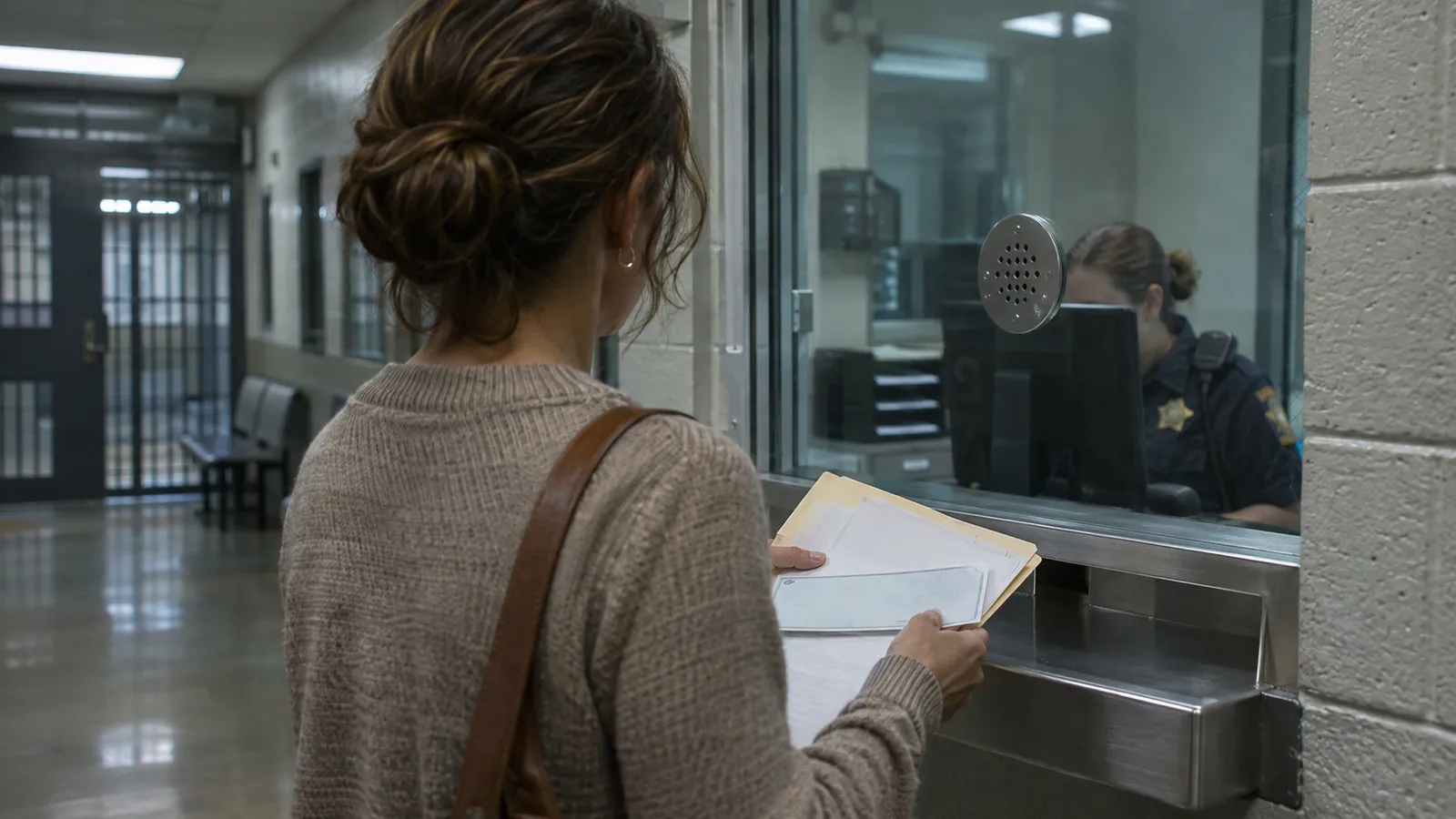
To bail someone out, find the jail holding them, learn the bond amount and bond type, then pay it at the jail or court yourself or pay a licensed bail agent to post it. If no bond is set yet, wait for the first court appearance. Before you pay, ask the jail whether the person has any other hold, because a hold can keep them inside even after bail is paid.
The short answer
Bailing someone out comes down to three questions. Where are they held? How much is the bond, and what kind is it? Is anything else keeping them in jail?
Once you know those answers, you pay the bond to the jail or court, or you hire a bail agent to post it for you. The jail then processes the release. That can take a short time or many hours, depending on the jail and how busy it is.
- Find the person on the county jail roster or by calling the jail.
- Get the booking number, the charges, the bond amount and the bond type.
- Ask if there are any holds, such as a warrant from another county, a probation hold or an immigration detainer.
- Pay the full bond at the jail or court, or pay a licensed bail agent to post a surety bond.
- Keep every receipt and make sure the person goes to every court date.
Find the person and the bond amount
Start with the county where the arrest happened. City police often take people to the county jail, but some cities run their own lockup for the first few hours. If you are not sure, call the arresting agency and ask where the person was taken.
Most county sheriffs post an online jail roster. On inmateroster.net you can open the roster page for the county and search by name. A roster entry usually shows the booking date, the charges and, in many counties, the bond amount.
Then call the jail. Ask for the booking or records desk and have the person's full legal name and date of birth ready. Ask for:
• The booking number. Every office you deal with will ask for it.
• Each charge and the bond on each one. Some jails list a separate bond per charge, and the total is what you pay.
• The bond type. Cash only, surety allowed, or cash or surety. A "cash only" bond cannot be posted by a bail agent.
• Where and how to pay. Some jails take payment at a window in the lobby. Others send you to the court clerk.
• Holds. Ask directly: "Is there any hold or detainer on this person?"
If the person was arrested on a warrant, the bond amount may already be written on the warrant. If they were arrested on the spot, many counties use a bail schedule that sets an amount for common charges, so bond can be posted before seeing a judge.
If no bond is set yet
Sometimes the roster shows no bond amount, or says "no bond" or "hold without bond." These can mean different things, and jails do not all use the terms the same way.
No bond set yet. The charge is not on the bail schedule, or the county requires a judge to set bail for that charge. The person waits for a first appearance, sometimes called an initial appearance, arraignment or bail hearing. There is nothing to pay until then.
Hold without bond. A judge or the law has ordered the person held with no way to buy release for now. You cannot post bail on that charge. A lawyer can ask the court to review the order or set conditions.
No bond because of a hold. The person may be held on a probation or parole violation, a warrant from another place, or a federal detainer. Bail on the new charge does not resolve that.
How fast is the first hearing? After a warrantless arrest, the U.S. Supreme Court held in County of Riverside v. McLaughlin (1991) that a probable cause decision within 48 hours of arrest is generally prompt enough. If it takes longer, the government has to show an emergency or other extraordinary reason, and the Court said weekends do not count as one. That rule is about the probable cause check. Many states set their own, sometimes shorter, deadlines for a first appearance. Ask the jail or the public defender when the hearing is scheduled.
- If you can, attend the first hearing. A judge may ask about work, family and where the person will live when deciding on release.
Ways to pay bail
Once a bond is set, there are four common ways out. Not every option is offered in every county or on every charge.
Cash bond. You pay the full amount to the jail or the court clerk. Accepted payment forms vary a lot. Some jails take cash and money orders only. Others take cards through an outside vendor that adds a service fee, and some let you pay online or at a kiosk. Personal checks are often refused. Call ahead and ask. The upside of cash bail is that it is usually returned when the case ends, as long as the person made every court date.
Surety bond through a bail agent. A licensed bail agent (bondsman) posts the full bond and you pay the agent a premium. In many states the premium is around 10% of the bond. The premium is the agent's fee. You do not get it back, even if the charges are dropped. Some states regulate the rate. In Florida, for example, state law makes it a crime for an agent to charge more or less than the premium rate filed with and approved by the state insurance regulator. The agent may also ask for collateral, like a car title, and for a co-signer.
Property bond. Some courts let you pledge real estate. Expect to prove the equity with deeds, tax records or an appraisal, and expect it to take longer than a cash or surety bond.
Release on recognizance or signature bond. The person signs a promise to return to court and pays nothing up front. A judge usually decides this at the first hearing. An unsecured bond works the same way, except the person owes a set amount if they miss court. This is the cheapest outcome, which is why it pays to have a lawyer at the first hearing.
- Check a bail agent's license with your state insurance department before you pay anything.
- Get the premium, any extra fees and the collateral terms in writing.
States where you cannot use a bondsman
In a few states, a bail bond company is not an option at all.
• Illinois. The Pretrial Fairness Act ended money bail statewide on September 18, 2023. There is no bail to pay. A judge either releases the person on conditions or orders them held after the prosecutor files a petition and wins a detention hearing.
• Kentucky. State law (KRS 431.510) bans bail bonding for profit. If a judge sets money bail, you pay it directly to the court clerk or the jail.
• Oregon. There are no commercial bondsmen. Under ORS 135.265, the defendant can usually deposit 10% of the security amount with the court clerk, with a $25 minimum. If the person meets every condition, the clerk returns 85% of the deposit and keeps 15% as a fee, at least $5 and no more than $750. Oregon property, stocks or bonds worth double the security amount can be posted instead.
• Wisconsin. A surety cannot be paid for acting as a surety, so there is no bail bond business. Judges set signature bonds or cash bonds, and cash is paid to the jail or the clerk of circuit court.
Some other states also have a court deposit option that works like Oregon's, often 10% paid to the clerk. Ask the clerk before you call a bail agent. Most of a deposit comes back. A premium does not.
How to get someone out of jail with no money
If the family cannot raise the bond or a premium, there are still options.
Start with the bail amount itself. If the person cannot afford a lawyer and faces possible jail time, the court can appoint a public defender, often at or near the first hearing. The lawyer can ask the judge to lower bail or to release the person on recognizance. Proof of a job, a lease, school enrollment, caregiving duties or medical needs can help. Call the public defender's office in the county and give them the booking number.
Next, look for a bail fund. Some nonprofits pay bail for people who cannot afford it. The Bail Project works in select jurisdictions, says its help is free, and takes requests through a form on its website. The National Bail Fund Network, hosted by Community Justice Exchange, keeps a directory of community bail funds around the country. Funds have limited money, cover only certain areas and set their own rules. Some states also limit what charitable bail funds can do, so call early.
Payment plans are the last resort. Many bail agents will post the bond if you pay part of the premium now and the rest over time. Read the contract closely. You still owe the whole premium even if the case is dismissed next week. Missed payments can bring late fees, and in some contracts the agent can surrender the defendant back to jail. Co-signing also makes you liable for the full bond if the person skips court.
- Before the first hearing, gather a pay stub, a lease or utility bill, and a phone number for an employer. Give them to the defense lawyer.
How long release takes, including nights and weekends
There is no national standard for how fast a jail must release someone after bail is paid. It depends on the jail's staffing, how many people are being booked in or out, and whether paperwork has to come from a court.
Many large jails accept bail around the clock, so you can bail someone out at night or on a weekend if the bond is already set. Smaller jails may accept payment only during certain hours, and court clerks are usually closed on nights, weekends and holidays. If the bond has not been set yet, the person may have to wait for the next court session. Some counties hold weekend or holiday hearings and some do not.
Before release, the jail typically checks for warrants and holds, returns the person's property and processes paperwork. If anything turns up in that check, release stops.
The most reliable estimate comes from the jail itself. Ask the release desk what the usual wait is and where the person will walk out.
Your responsibilities if you pay or co-sign
When you post bail, you are not legally responsible for the person's behavior, and you cannot be charged for their crime. But your money, and sometimes your property, is now tied to whether they show up to court.
• Court dates. Write down every date and check for changes. Courts reschedule often, and the defendant is the one who gets the notice.
• Forfeiture. If the person misses court, the judge can order the bail forfeited and issue a warrant. If you paid cash, you can lose it. If you co-signed with a bail agent, the agent can come to you for the full bond amount and any costs of finding the person.
• Getting cash bail back. When the case ends, the bond is exonerated (released). Refunds are usually mailed to whoever is named on the receipt, and they can take weeks. In many places the court can first take out fines, fees, costs or restitution owed in the case, even if you were the one who paid. In Oregon, only 85% of a 10% deposit comes back. Ask the clerk about deductions before you pay.
- Keep the payment receipt and the booking number together. You will need both for a refund.
Holds that can block release
Paying bail only covers the case it was set on. If the person has another hold, they stay in jail, and your money may still be tied up. Ask about holds before you pay.
A warrant from another county or state is the most common one. The other county can pick the person up after the local case is bonded. Sometimes bond can be posted on that warrant too, but often only after transfer.
A probation or parole hold is next. If the arrest may violate probation or parole, the supervising agency can place a hold. In many places that hold has no bond until a judge or the parole authority acts.
Then there is the immigration detainer. U.S. Immigration and Customs Enforcement can send a jail a detainer (Form I-247) asking to be notified before release and asking the jail to hold the person so ICE can take custody. Under federal regulation 8 CFR 287.7(d), the jail is to hold the person no longer than 48 hours, excluding Saturdays, Sundays and holidays. That 48-hour limit is a maximum, not a guaranteed wait, and a detainer is a request to the jail. It is not a court order.
Many states and local jails limit whether they honor detainers. In California, Government Code 7284.6, enacted by SB 54, generally bars law enforcement from holding someone on an immigration hold request, with limited exceptions tied to other sections of state law. Illinois's TRUST Act generally bars local police from helping with civil immigration enforcement, which includes holding people on immigration detainers. Other states require jails to honor detainers. Before you pay bail for someone with a detainer, talk to an immigration lawyer, because release from jail can mean transfer to ICE custody instead of going home.
Common questions
Can you bail someone out right away?
Only if a bond is already set. Many counties use a bail schedule so common charges have an amount at booking. Serious charges, warrant holds and some domestic violence cases often need a judge first. The jail has to finish booking before it will take payment.
Do you get bail money back?
If you paid the full cash bond to the court, it is usually returned after the case ends, as long as the person made every court date. The court may subtract fines or fees first. A bail agent's premium is never refunded. In Oregon, 85% of a 10% court deposit comes back.
If I bail someone out, am I responsible for them?
You are not responsible for what they do, but you are responsible for the money. If they miss court, you can lose cash bail. If you co-signed with a bail agent, you can owe the full bond amount and recovery costs.
Can you bail someone out online?
In some counties, yes. Some jails and courts take card payments through an online vendor that charges a fee. Many do not. Some bail agents also handle paperwork by phone and e-signature. Call the jail to ask which methods it accepts.
Can you get out of jail on the weekend?
Yes, if bond is already set and the jail accepts payment on weekends. Many jails take bail 24 hours a day. If the person still needs to see a judge, they may wait until the next court session, which in some counties is not until Monday.
How do I find out someone's bond amount?
Check the county jail roster, which often lists bond per charge, then call the jail with the person's full name and date of birth to confirm. Ask for the booking number, the bond type and whether any holds exist.
Sources
- 8 CFR 287.7, Detainer provisions (Cornell LII)
- County of Riverside v. McLaughlin, 500 U.S. 44 (1991) (Cornell LII)
- Oregon Revised Statutes 135.265, Security release
- Florida Statutes 648.33, Bail bond rates
- California Government Code 7284.6 (SB 54)
- Illinois Attorney General: Law enforcement guidance on the TRUST Act
- The Bail Project: Get help with bail
- National Bail Fund Network directory (Community Justice Exchange)
General information, not legal advice. Laws and court rules differ by state and change; for a specific case, talk to a lawyer licensed in that state.