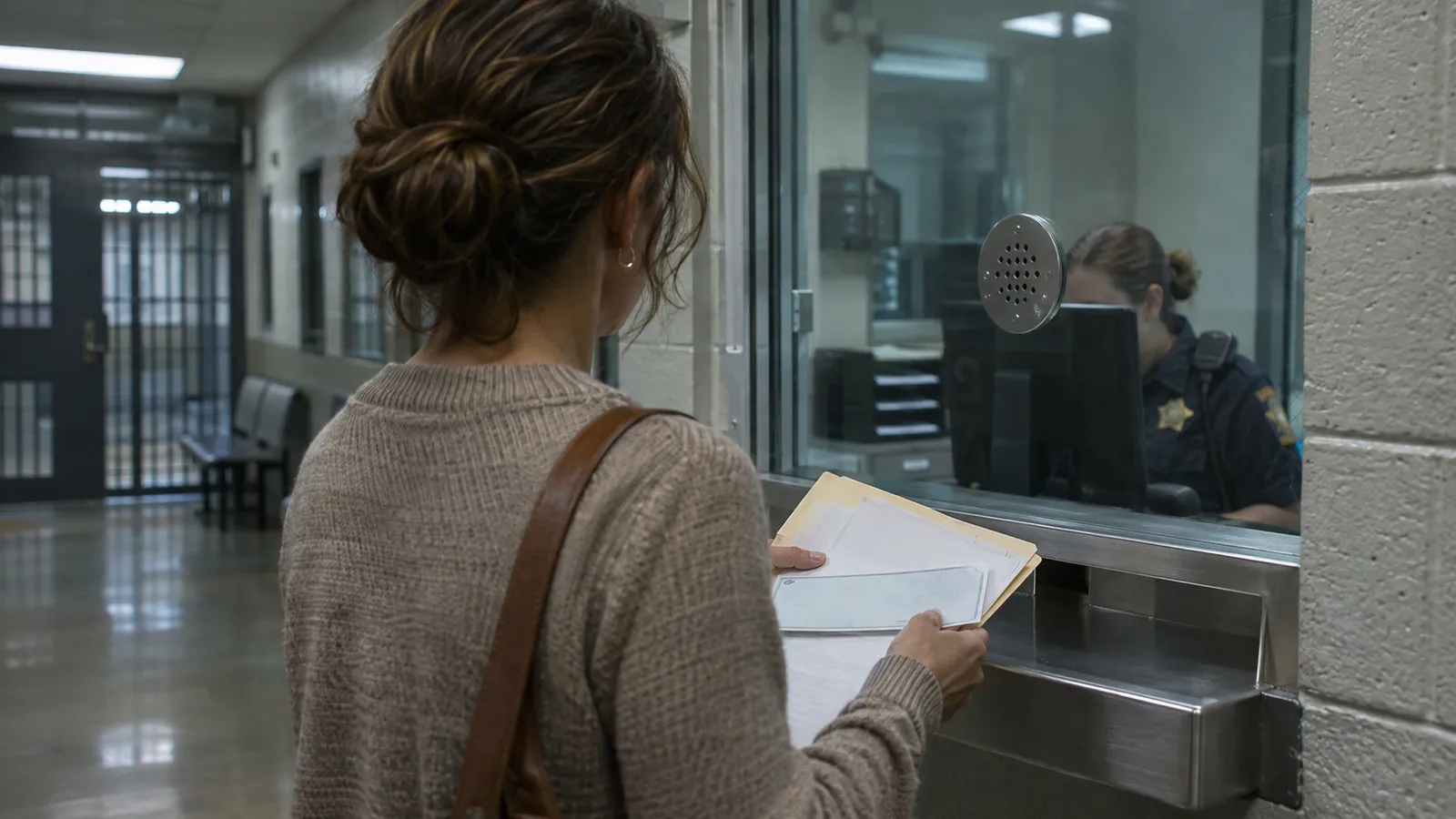
Release can take under an hour at a small, quiet jail and many hours at a large, busy one. Before anyone walks out, the jail confirms the release paperwork, checks for warrants and holds, and returns property and money. Most states set no deadline, so the best estimate comes from calling the jail's release desk.
The short answer
There is no national rule for how fast a jail must release someone. The wait depends on the jail's size and staffing, how many people are being booked in and out, the time of day and whether paperwork has to come from a court. A rural jail with a few dozen beds may release someone within an hour. A big county jail can take most of a day.
A few states do set a limit. Colorado is one. Its bail statute says a jail must release a person granted a cash bond as soon as practicable, and no later than six hours after bond is set, once the person is physically in the jail and the payer has told the jail the bond is ready to post. People granted a personal recognizance bond must be released within six hours of being physically present in the jail. The law says staffing shortages and routine practice don't count as reasons for a delay.
If your state has no rule like that, call the jail's release or records desk. Ask what the usual wait is and where the person will come out.
- Ask the jail: "Has the release order been received, and is anything else holding this person?"
- Ask which door or lobby people are released from, and if you can wait there.
What has to happen before someone walks out
Jails release people through a series of steps. Each county does it a little differently, but the order is similar.
First, the jail needs proof that the person can be released. That might be a bond posted at the jail, a bond filed by a bail agent, a judge's release order, a dismissal, or the end of a sentence. If the order comes from a courtroom, it has to reach the jail's records staff, and that can take time.
Next, records staff check for anything else that would keep the person in custody. That means warrants from other counties or states, probation or parole holds, and immigration detainers. If something turns up, release stops and the jail contacts the agency that issued it.
Then an officer brings the person from their housing unit to the release area. The person changes into their own clothes, gets their property back, signs for it, and gets any money left on their jail account. They usually also sign release paperwork, which can include conditions of release and the next court date.
Only then do they walk out. Every step depends on staff who are also doing intake, transport, meals and counts, so the order goes as fast as the jail's busiest part.
Types of release and how each one starts
How someone gets released changes how long it takes and where they come out.
Bond posted. Once cash bail is paid or a bail agent posts a surety bond, the jail processes the release. Our guide on how to bail someone out of jail covers how to pay. The release itself follows the steps above.
Personal recognizance or signature bond. A judge lets the person go on a promise to return to court. There is nothing to pay, but the jail still runs the same checks. If conditions like electronic monitoring are part of the order, setting those up can add time.
Cite and release. For some minor offenses, police can issue a citation with a court date instead of booking the person into jail at all, or release them shortly after booking. These releases are often the fastest.
Charges dropped or case dismissed. When a prosecutor drops charges or a judge dismisses a case, the person is usually released, but only after the jail gets the paperwork and checks for holds.
Sentence completed. People serving a jail sentence are released on their release date, which may include credit for time already served and, in many states, good-conduct credit. Ask the jail for the projected date.
Transfer, not release. Sometimes a jail says someone is "released" when they are actually handed to another agency, such as another county, the state prison system, the U.S. Marshals or ICE. Ask whether the person is being released to the street or released to another agency.
Holds and warrant checks
The records check is where most surprise delays happen. A hold from another agency keeps the person in jail even after the local case is resolved.
Common holds include a warrant from another county or state, a probation or parole violation hold, and an immigration detainer. With a warrant, the other agency may come pick the person up, and that wait can run days, depending on distance and the agencies involved. A probation or parole hold often has no bond until a judge or parole authority acts.
For an ICE detainer, federal regulation 8 CFR 287.7(d) says a jail should hold the person no more than 48 hours beyond when they'd otherwise be released, excluding Saturdays, Sundays and holidays. Some states limit whether local jails honor these requests at all. Our bail guide explains detainers in more detail.
If the jail says there is a hold, ask which agency placed it and get a phone number. Then call that agency or the person's lawyer. The jail can't lift a hold that another agency placed.
- Ask about holds before paying bail. Paying on one case does nothing about a hold from somewhere else.
What slows release down
Most delays come from ordinary jail operations, not anything about the person.
Counts are one. Jails stop most movement while staff count everyone in the facility, several times a day. Shift changes are another. Some jails ask visitors to avoid them for property pickups for that reason. Busy booking periods, such as late nights and weekends, slow down release because the same staff handle both.
Paperwork from court can stall things. If a judge orders release late in the day, the order may need to be entered and sent to the jail before anyone acts on it. Release orders that come after the court clerk's office closes can wait until the next business day in some places.
Conditions can add time too. If the release requires an ankle monitor, someone has to fit it. Colorado's statute allows a court to let the jail hold a person up to 24 hours after arrival to fit a monitor, which shows how long that step can take.
Some charges carry a waiting period. Several states allow or require a hold of a set number of hours after arrests for domestic violence before release, often called a cooling-off period. Some jails also won't release a person who is still intoxicated or who needs medical clearance.
Fees are a different story in some states. Colorado's law says a person who has posted bond must be released whether or not they have paid booking, bond processing or monitoring fees. Other states may handle fees differently, so ask the jail.
Property and money at release
When someone is booked, the jail inventories and stores their belongings. At release, the person signs for them and takes them back. If anything is missing, they should say so before signing and ask how to file a claim.
Items held as evidence are a separate matter. A phone or car taken by police as evidence won't be in the jail's property bag. Getting it back goes through the police agency or the court, often after the case ends.
Money comes back in several ways. Some jails hand back cash for small amounts. Many issue a check or put the balance on a prepaid release card. Practices differ by county. Lyon County, Nevada, for example, says money left in a person's account is put on a debit card issued at release. Fees for medical copays or other charges may be taken out first, depending on the jail.
Release cards have drawn federal scrutiny. In October 2021, the Consumer Financial Protection Bureau ordered JPay, a release card provider, to pay $4 million in consumer redress and a $2 million penalty. The CFPB found the company charged fees to people who had to use its cards to get their own money back. The order barred most fees on those cards, except an inactivity fee after 90 days. Read the card's fee sheet before using it, and withdraw the balance in a way that avoids fees.
Family can often pick up property while the person is still in custody, but usually only with the person's signed authorization and a photo ID. Travis County, Texas, for example, requires the person in custody to sign a property release form first and says items for people sent to prison are discarded if not picked up within 30 days. Hours vary a lot. Yuba County, California, says released property can be picked up at the jail lobby 24 hours a day, while other jails only do it on weekdays during office hours.
Where people come out and getting them home
Most jails release people through a public lobby or a designated release door. Large counties may run several facilities, and a person may be released from a different building than the one you visited. Ask the jail which one.
If someone is ordered released in court, practices differ. In some places they are taken back to the jail to collect their property and complete the paperwork. That surprises families who expect to leave the courthouse together.
Releases can happen at any hour, including late at night. If you can't be there, make sure the person has a way to call you. Their phone may be dead after days in property storage. Some jails have a lobby phone. Some areas have reentry programs or community groups that meet people at release, so ask the jail if one operates nearby.
Read the release paperwork together before you leave. It usually shows the next court date and any conditions, like no-contact orders or check-ins with pretrial services. Missing a court date can lead to a warrant.
Release after a sentence
When someone finishes a jail sentence, the jail calculates the release date from the sentence, credit for time served and any good-conduct credit the state allows. Ask the jail for the projected date and keep checking, because it can change.
State prison releases follow the state DOC's rules. Some people leave on parole or another form of supervision and must report to an officer soon after release. Some states give people a small sum of money at release, often called gate money, but amounts and rules differ by state. Check the DOC website or ask the facility's release planning staff.
Federal prison has specific rules in the law. Under 18 U.S.C. 3624(a), if a federal prisoner's release date falls on a Saturday, Sunday or legal holiday, the Bureau of Prisons may release them on the last weekday before it. Under 3624(d), the BOP furnishes suitable clothing, transportation to the place of conviction, the person's home or another authorized place, and money of up to $500 if the person needs it. Many federal prisoners spend the end of their sentence in a residential reentry center or on home confinement. Section 3624(c) allows up to 12 months in community confinement and home confinement for the shorter of 10% of the term or 6 months.
What family should bring
A little planning makes release day easier.
• Your photo ID, if you plan to pick up property or enter the lobby.
• A phone charger and a fully charged phone.
• Weather-appropriate clothes and shoes. People leave in what they wore when arrested. That might be shorts in winter, or clothes that were damaged or taken as evidence.
• Any medication the person needs right away. Jails may give only a short supply or a prescription, if anything.
• The booking number and the jail's phone number.
• Water and something to eat. Release can come after a long wait, at any hour.
Plan the ride home. If the person's car was towed during the arrest, find out where it is and what the tow yard needs to release it. Storage fees often add up each day.
- If you'll be waiting a long time, ask the jail to call you, or have the person call from the lobby phone once released.
Common questions
How long does it take to get released from jail after bail is posted?
It varies by jail. Small jails can release someone within an hour or so. Large, busy jails can take many hours. Colorado law sets a six-hour limit in most bond cases, but most states don't set a deadline. Call the jail's release desk for its usual wait.
Why is jail release taking so long?
Common reasons are a release order that hasn't reached the jail, a warrant or hold found during the records check, a headcount or shift change, a busy booking period, or a condition like an ankle monitor that must be set up first. Ask the jail what step the release is waiting on.
Can jail release someone in the middle of the night?
Yes. Many jails release people at all hours, including late at night and on weekends. Make sure the person can reach you, and ask the jail where releases happen so you know where to wait.
Do you get your phone and belongings back when released?
Yes, property stored at booking is returned at release, and the person signs for it. Items kept by police as evidence are not in jail storage and must be requested from the police agency or the court.
Are you released from court or from the jail?
It depends on the county. In many places, a person ordered released in court goes back to the jail first to get their property and finish paperwork. Ask the defense lawyer or the jail which happens in your county.
Does the jail tell family when someone is released?
Usually not directly. If the jail takes part in VINE, you can register at vinelink.com for a phone, text or email alert when custody status changes. Otherwise, call the jail to check.
Sources
- Colorado Revised Statutes 16-4-102, Right to bail and release timing
- 18 U.S.C. 3624, Release of a prisoner (Cornell LII)
- 8 CFR 287.7, Detainer provisions (Cornell LII)
- CFPB: CFPB penalizes JPay over prepaid release cards (October 19, 2021)
- Travis County Sheriff's Office: Inmate property
- Lyon County, NV: Inmate money accounts
- Yuba County Sheriff's Office: Commissary and property release
General information, not legal advice. Laws and court rules differ by state and change; for a specific case, talk to a lawyer licensed in that state.