Four states do not allow for-profit bail bonding: Illinois, Kentucky, Oregon and Wisconsin. Illinois went further in September 2023 and ended money bail entirely. In the other states, bail bondsmen operate under state licensing rules, and since 2025 several states have moved to make it easier for judges to deny bail in serious cases.
The short answer: four states ban bail bondsmen
In most of the country, a family can call a bail bond company, pay a fee (usually around 10% of the bail amount), and the company promises the court it will pay the full amount if the defendant skips court. That fee is the company's charge for the service. You do not get it back, even if the charges are dropped.
Four states make that business illegal: Illinois, Kentucky, Oregon and Wisconsin. In those states, money for release goes straight to the court or jail, not to a private company. Massachusetts has no statutory ban, but commercial bail bonding there has largely disappeared in practice.
Outside the U.S., commercial bail is rare. The Philippines is the only other country commonly cited as having a for-profit surety bail system similar to the American one.
Kentucky: banned since 1976
Kentucky outlawed bail bonding for profit in 1976. The rule is in KRS 431.510, which makes it unlawful to work in the bail bond business or to act as a surety on a bail bond for pay. Penalties are set out in KRS 431.550.
Instead of bondsmen, Kentucky uses a statewide Pretrial Services agency run by the court system. Pretrial officers interview people after arrest and run a risk assessment, and a judge sets release terms. Many people are released on their own recognizance or with an unsecured bond. When a judge does set money bail, it is paid to the circuit court clerk or the jail.
Kentucky also limits charitable bail funds. Under the current text of KRS 431.510, a charitable bail organization may not post bail of $5,000 or more. It may not post bail at all for someone charged with a domestic or dating violence offense, someone who would be a violent offender under KRS 439.3401, or someone the group has bailed out before. The person posting on behalf of the group must show photo ID.
- If you are told to pay a "bondsman" for a Kentucky case, that is not a lawful service. Pay the clerk or jail directly.
Wisconsin: sureties cannot be paid
Wisconsin ended commercial bail in 1979. The key rule is Wis. Stat. 969.12(2): a surety must be an individual person, and "No surety under this chapter may be compensated for acting as such a surety." Section 969.12(1) also requires the surety to be a Wisconsin resident. The only exception is for traffic bonds under s. 345.61.
In practice, a judge sets either a signature bond (no money up front) or a cash bond. Cash bail is paid in full to the jail or the clerk of circuit court. A friend or relative can act as an unpaid surety, and the judge may ask that person to swear in an affidavit that they have enough non-exempt assets to cover the bond.
Oregon: a 10% deposit paid to the court
Oregon replaced bondsmen with a court-run deposit system. Under ORS 135.265(2), the defendant can deposit 10% of the security amount with the court clerk, with a minimum deposit of $25.
When the case ends and the release terms were followed, the clerk returns 85% of the deposit. The clerk keeps 15% as a release fee, but never less than $5 or more than $750. The clerk also keeps any interest earned on the deposit.
Instead of cash, ORS 135.265(3) lets a defendant post Oregon property, stocks or bonds worth double the security amount, owned by the defendant or by sureties. That value has to be backed by an affidavit.
- Example: on $10,000 security, you deposit $1,000. If the case ends with no missed court dates, the clerk returns $850.
- Ask the clerk whether the refund can be applied to fines or fees in the case, so you know how much will actually come back.
Illinois: no bondsmen and no cash bail
Illinois banned commercial bail bonds in 1963 and used a 10% court deposit system for decades. Then the Pretrial Fairness Act, part of the SAFE-T Act, ended money bail completely. The Illinois Supreme Court upheld the law 5-2 on July 18, 2023, and it took effect statewide on September 18, 2023.
Today no one in Illinois pays money to get out of jail before trial. Release is presumed. To hold someone, the prosecutor must file a petition and prove at a hearing that the person is charged with a detainable offense and poses a real danger or a flight risk. The defendant has a right to a lawyer at that hearing.
Police must generally cite and release people accused of offenses below a Class A misdemeanor, unless the person poses a threat or arrest is needed to stop further offending. Judges kept more power to hold people charged with domestic battery or violating orders of protection.
- If a relative is held in an Illinois jail, there is no bail to pay. Ask the public defender or a private lawyer when the detention hearing is set.
Places that limit money bail without banning bondsmen
Some states and the federal system still allow surety bonds but rarely rely on money bail.
• New Jersey: Its Criminal Justice Reform took effect on January 1, 2017. Judges use a risk assessment and pretrial monitoring instead of money. Cash bail still exists in law but is now uncommon.
• Washington, D.C.: Under D.C. Code 23-1321(c)(3), a judge may set a financial condition only if it does not result in the person being held. Most defendants are released without paying, or held after a detention hearing.
• Federal courts: Under 18 U.S.C. 3142(c)(2), a federal judge "may not impose a financial condition that results in the pretrial detention of the person." Federal defendants are released on conditions or held after a hearing. Commercial bail bonds play a small role.
• New York: A 2019 law, in effect since January 2020, removed cash bail for most misdemeanors and nonviolent felonies. Lawmakers amended it in 2020, 2022 and 2023, giving judges more room to set bail in some cases. Bondsmen still operate there.
• California: Voters rejected Proposition 25 in 2020, which kept commercial bail in place. In the 2021 case In re Humphrey, the California Supreme Court held that judges must consider a person's ability to pay when they set bail.
Recent changes: states moving to deny bail more often
Since 2025 the trend in many states has been toward holding more people before trial, mostly by widening the list of cases where a judge can deny bail outright.
• Texas: On November 4, 2025, voters approved Proposition 3. It lets judges deny bail for certain violent and sexual felonies, including murder, capital murder, aggravated sexual assault and human trafficking, when the state shows by clear and convincing evidence that no bail would protect the public or assure the defendant returns to court. It also guarantees a lawyer at the bail hearing.
None of these changes removed bail bondsmen. In Texas, if a judge sets money bail, a licensed bail agent can still post it.
How posting bail works in the other states
In most states, a judge or a preset bail schedule sets the amount. You then have three common ways to pay:
• Cash bond: Pay the full amount to the jail or court clerk. You get it back when the case ends if the defendant made every court date, though the court may first subtract fines, fees or restitution.
• Surety bond through a licensed bail agent: Pay the agent a premium, usually about 10% of the bail and sometimes more. The premium is not refundable. The agent may also want collateral such as a car title or a lien on a house, and the person who signs (the indemnitor) owes the full bail if the defendant disappears.
• Property bond: Some states let you pledge real estate. Expect to show the equity with a title report and appraisal, and expect it to take days, not hours.
Some states also offer a court deposit option like Oregon's, where you pay a percentage to the clerk and get most of it back. Ohio is one example under its Criminal Rule 46. Ask the clerk whether your county allows it before you call a bondsman.
- Before you sign with a bail agent, check that the agent is licensed with your state insurance department and get every fee in writing.
- Ask the defense lawyer to request a bail review. A lower amount or release on recognizance costs nothing.
Steps to take after an arrest
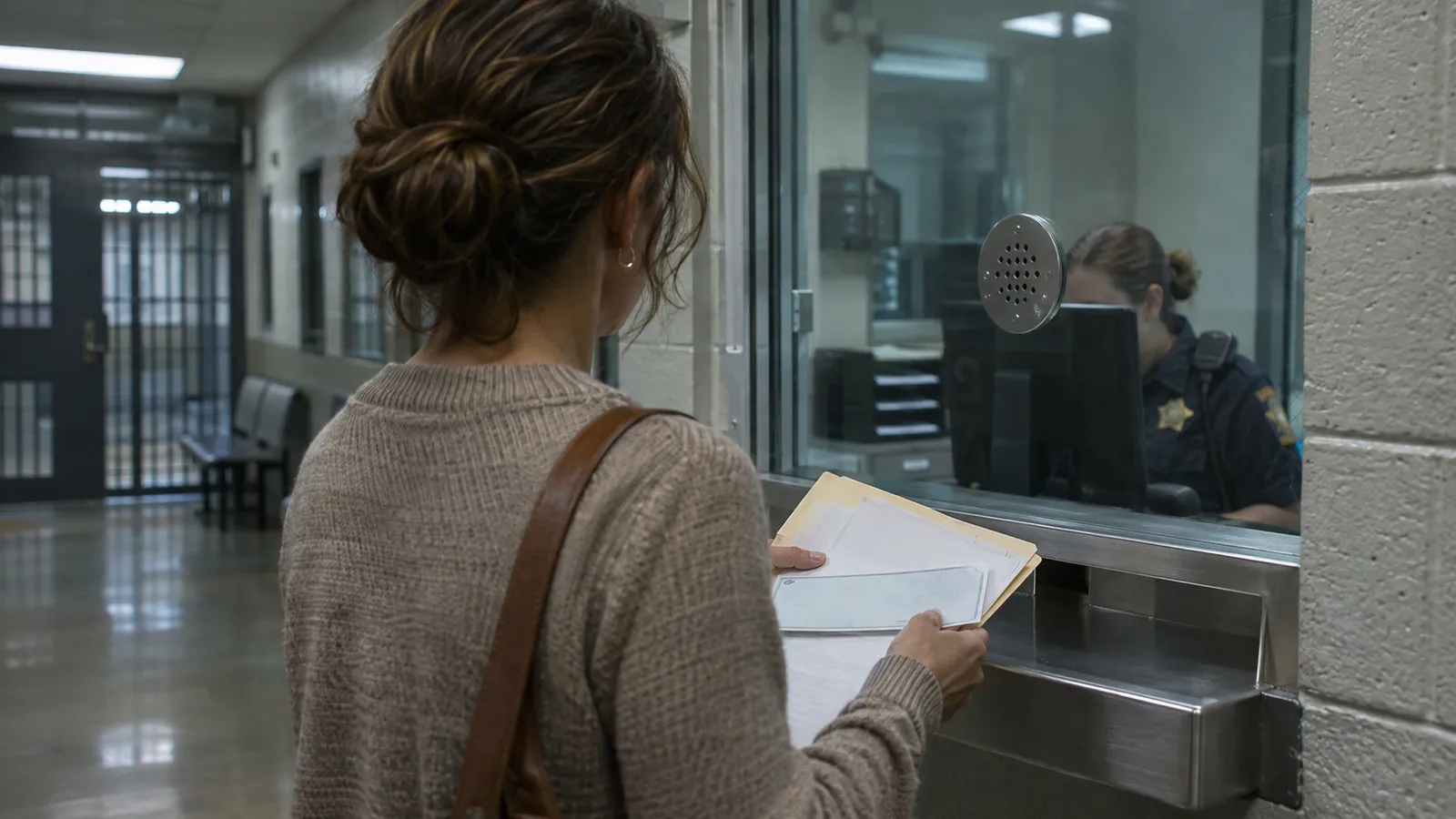
Find the person. Search the county jail roster or call the jail. You will need the booking number, the charges, the bail amount and the type of bond allowed.
Check the state rules above. In Illinois, there is nothing to pay. In Kentucky, Oregon and Wisconsin, you deal only with the court or jail. Elsewhere, compare paying cash with paying a bail agent.
Ask how the jail takes payment. Many jails take cash, cashier's checks or card payments through an outside vendor that charges a fee. Some do not accept personal checks.
Keep every receipt. You will need it to claim a refund of cash bail or a deposit when the case is over.
Make sure the defendant goes to court. A missed date can lead to forfeiture of the money and a new warrant.
Common questions
What states do not allow bail bondsmen?
Illinois, Kentucky, Oregon and Wisconsin. Kentucky bans bail bonding for profit under KRS 431.510, and Wisconsin bars paying a surety under Wis. Stat. 969.12(2). Oregon uses a 10% deposit paid to the court, and Illinois ended money bail in 2023. Massachusetts has no formal ban, but commercial bail is rare there.
Which states have no cash bail?
Illinois is the only state that has fully ended money bail, effective September 18, 2023. New Jersey and Washington, D.C. rarely use it, and New York removed it for most misdemeanors and nonviolent felonies. Every other state still lets judges set cash bail.
Do you get bail money back?
If you paid the full cash bail to the court, you usually get it back when the case ends, as long as the defendant made every court date. The court may first take out fines or fees. In Oregon you get back 85% of a 10% deposit. A bail agent's premium is never refunded.
How much does a bail bondsman charge?
Usually about 10% of the bail amount, and sometimes more, depending on the state and the agent. On $5,000 bail that is around $500, which you do not get back. The agent may also require collateral and a co-signer who owes the full amount if the defendant does not show up.
How do I bail someone out in Wisconsin?
Pay the cash bail set by the judge directly to the county jail or the clerk of circuit court. No company can post it for a fee. If the judge sets a signature bond, the defendant signs a promise to appear and pays nothing up front.
Can a judge refuse to set bail?
Yes, in certain cases. Every state lets judges hold some defendants without bail after a hearing, and the list keeps growing. Texas voters expanded it in 2025. In Illinois, a judge can deny release only after the prosecutor files a petition and proves the case for detention.
Sources
- Kentucky Revised Statutes 431.510 (FindLaw)
- Wisconsin Statutes 969.12, Sureties (FindLaw)
- Oregon Revised Statutes 135.265, Security release
- Capitol News Illinois: Illinois Supreme Court upholds end of cash bail
- 18 U.S.C. 3142, Release or detention of a defendant pending trial (Cornell LII)
- D.C. Code 23-1321, Release prior to trial
- Texas Tribune: Texas bail constitutional amendment, Proposition 3
General information, not legal advice. Laws and court rules differ by state and change; for a specific case, talk to a lawyer licensed in that state.