To put money on an inmate's books, find out which payment company the jail uses, then deposit online, by phone, at a lobby kiosk, or by mailing a money order with the person's full name and booking number. Fees, holds and limits are set by each jail and vendor, so check the jail's own deposit page first. For federal prison, use MoneyGram, Western Union or the BOP lockbox in Des Moines.
The short answer
"Books" is jail slang for the person's trust account, also called a commissary or inmate account. Money in that account pays for snacks, hygiene items, stamps, phone time and, in many jails, tablet use.
You cannot hand money to the person. You send it to the account, and almost every jail now routes that through one or two outside payment companies. The jail picks the company. You do not get a choice.
So the work is mostly finding out how this particular jail does it. Once you know the vendor and the person's booking number, a deposit takes a few minutes.
- Get the person's full legal name and booking or inmate number from the jail roster or by calling the jail.
- Find the deposit page on the sheriff's or jail's own website. It names the vendor and the accepted methods.
- Compare the fee for each method before you pay. Mailed money orders are often free but slow.
- Keep the receipt or confirmation number until the money shows up.
Find out which company the jail uses
Start with the jail's website. Most sheriff's offices have a page called inmate accounts, inmate funds, commissary or "deposit money." That page lists the company and the ways to pay. If you open the county page on inmateroster.net, the sheriff's office link and phone number are there too.
The names you will see most often for county jails include Access Corrections, ConnectNetwork (run by ViaPath, the former GTL), and smaller kiosk companies such as TouchPay and JailATM. JPay is used mostly by state prison systems. Federal prisons use MoneyGram, Western Union and a mail lockbox.
Two real examples show how different this can be. The Alexandria, Virginia sheriff's office takes online and phone deposits through Access Corrections. Allegheny County Jail in Pittsburgh uses ConnectNetwork for online and phone deposits and has kiosks in the jail lobby.
If the website is unclear, call the jail and ask for inmate accounts or the cashier. Ask which company they use and whether the person has to be in general population before money can be added. Do not search for "inmate deposit" and click the first ad. Use the link on the jail's own site.
Ways to put money on someone's books
Most jails offer some mix of the methods below. Not every jail offers all of them, and some have dropped in-person cash entirely.
• Online. You make an account on the vendor's website or app, search for the facility, pick the person, and pay by debit or credit card. This is usually the fastest option and usually costs the most.
• By phone. The same vendor takes card payments over the phone. Alexandria's page lists Access Corrections at 866-345-1884, with Spanish spoken. Phone fees are often the same as online or higher.
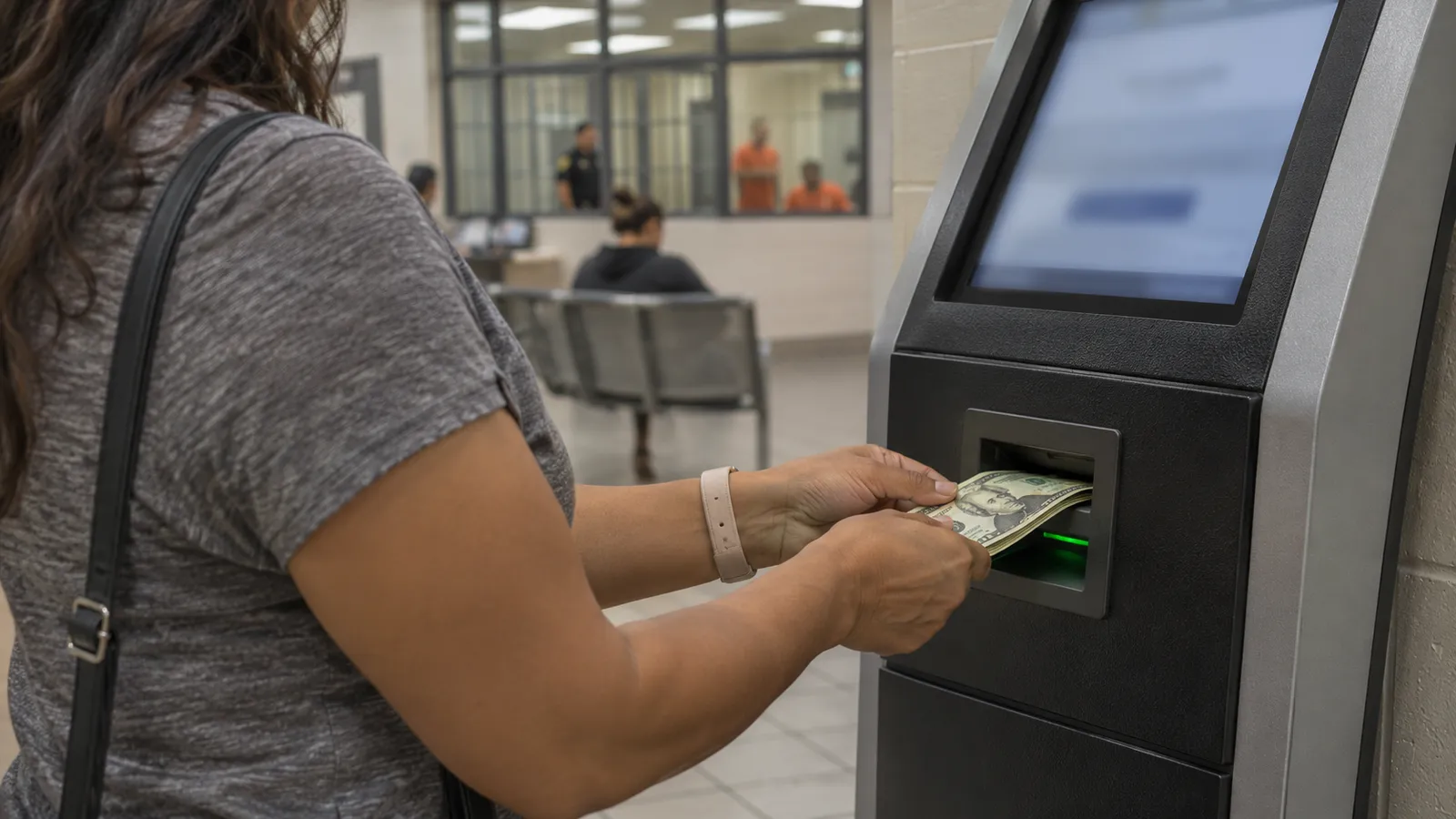
• Lobby kiosk. Many jails have a machine in the lobby that takes cash, and often cards. Pender County, North Carolina has a lobby kiosk open 24 hours a day. Allegheny County's kiosks take cash, debit and credit cards during lobby hours, 7 a.m. to 8 p.m.
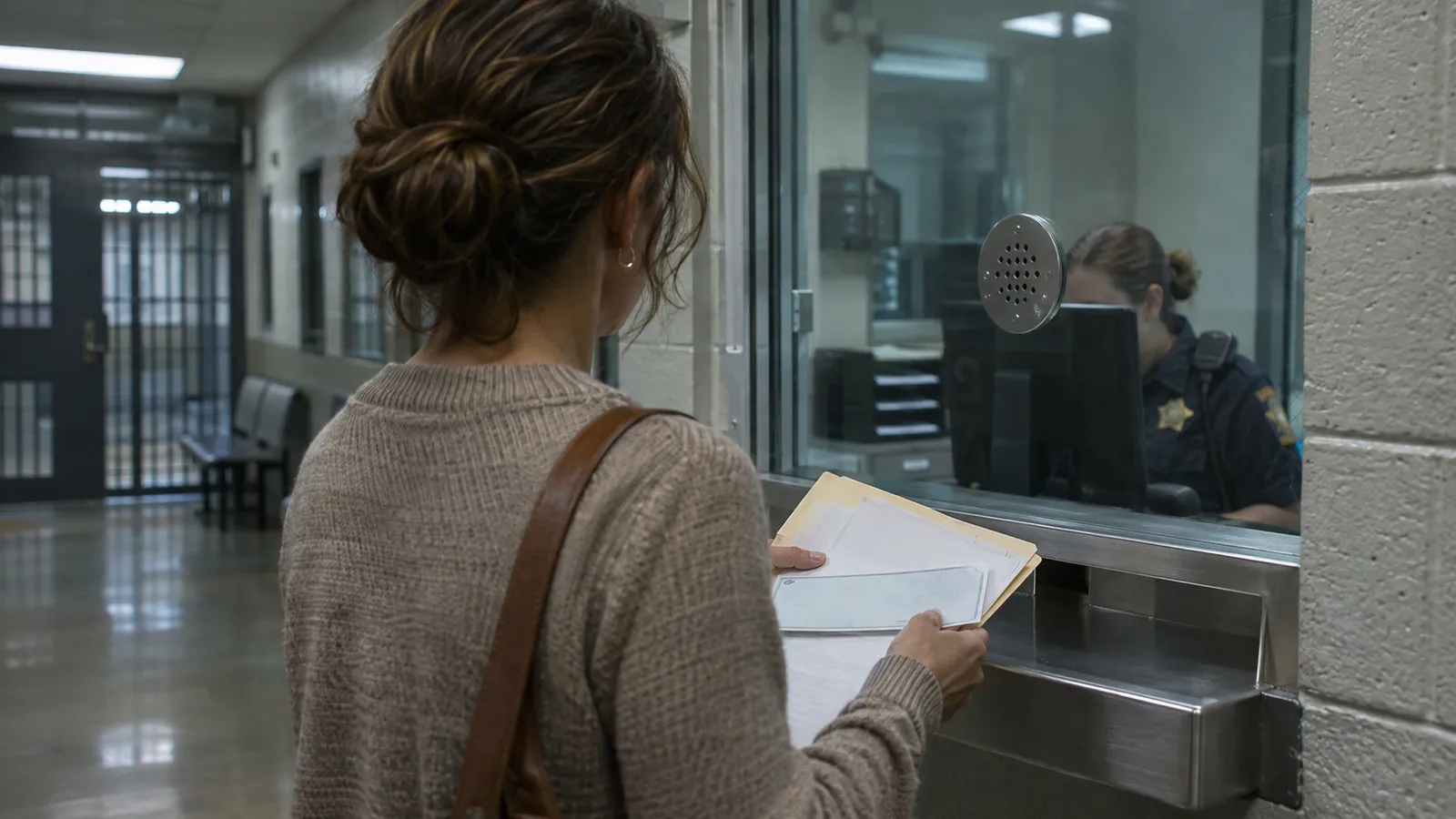
• Money order by mail. Most jails accept a U.S. Postal Service or other money order, or a cashier's check, made out to the person. Write their full name and booking number on it. Alexandria takes money orders and cashier's checks by mail and in a drop box at its visitor center. Do not send cash or personal checks in the mail unless the jail says it accepts them. Most do not.
• Western Union or MoneyGram. Some state prisons and all federal prisons accept these. County jails less often do.
Some jails add rules about who can deposit. Since November 1, 2024, Allegheny County has required people who deposit to be on the incarcerated person's approved visitor list.
- Before you mail a money order, confirm the exact mailing address on the jail's deposit page. It is often a different address from the one used for letters.
What deposits cost
The jail usually does not set the fee. The vendor does, under its contract with the county, and the fee changes with the amount you send.
Alexandria, Virginia posts its Access Corrections fees for online and phone deposits. They are $2.95 for $0.01 to $20.00, $4.95 for $20.01 to $60.00, $7.95 for $60.01 to $100.00, $8.95 for $100.01 to $200.00, and $9.95 for $200.01 to $300.00. The page says the fees can change.
Pender County, North Carolina charges 10% for internet deposits, with a $3 minimum. It does not list a kiosk fee and does not offer phone deposits.
Notice how tiered fees work. In Alexandria, sending $20 costs $2.95 but sending $21 costs $4.95. If you plan to send small amounts, check where the tiers break. One larger deposit often costs less than several small ones.
Mailed money orders usually have no jail fee, but you pay for the money order and postage, and the money may be held before the person can use it.
How long it takes
Electronic deposits are fast in most places. Pender County says kiosk deposits post to the account immediately. For federal prison, the BOP says MoneyGram and Western Union payments sent between 7 a.m. and 9 p.m. Eastern post within 2 to 4 hours, and later ones post at 7 a.m. the next morning.
Mail is slower, and jails often hold money orders before releasing them. Allegheny County places money orders over $100 on a 10 business day hold. The BOP holds non-postal money orders and non-government checks for 15 days, and foreign items payable in U.S. dollars for 45 days.
Commissary is also not open every day. Many jails take orders on a set day each week and deliver later. Money that arrives the day after the order cutoff may sit for a week before the person can spend it on store items.
Limits on deposits and spending
Jails limit how much you can send, how much the person can spend, or both.
Pender County caps deposits at $300 per week per inmate or per cardholder. Alexandria's fee table stops at $300 per online or phone transaction. Other jails set different caps, and some list none.
Spending limits are separate. In federal prison, BOP Program Statement 4500.13, dated May 7, 2026, raised the monthly commissary spending limit from $360 to $460. It goes up by $50 during the November and December holiday period. Postage stamps, over-the-counter medicine, copy cards and a few other items do not count toward the limit. A warden can also set item quantity limits.
If you want to support someone for a long stay, smaller regular deposits often work better than one large one. They stay under weekly caps, and the person is not left with nothing if one deposit is held.
What the money can be used for, and what can take it
Commissary is the main use: food, coffee, hygiene items, writing paper, envelopes, stamps and sometimes clothing like socks or shoes. Many jails also let the trust account pay for phone calls, video visits, messages and tablet media. Allegheny County says trust account funds can be used for tablet purchases and visits.
Some vendors sell separate prepaid phone or tablet accounts. Money put there can only be used for that service. If you want the person to choose, put it on the trust account.
The jail may also take money out. Some counties charge fees or medical copays, and unpaid amounts become a negative balance. Lyon County, Nevada says 25% of all deposits go toward a negative balance, which it says usually comes from medical treatment and medication. In federal prison, people in the Inmate Financial Responsibility Program make payments on court-ordered fines and restitution from this account. Ask the jail whether the person has a negative balance before you send a large amount.
What happens to the money at release
The balance belongs to the person, and they get it back when they leave. How they get it varies.
Allegheny County pays balances of $50 or less in cash. Above $50, the person gets $50 in cash and a check for the rest. Lyon County, Nevada gives released people a debit card for the balance. In federal prison, the BOP pays up to $500 in cash at release, with the rest sent by U.S. Treasury check.
Release debit cards have a history of heavy fees. In October 2021, the Consumer Financial Protection Bureau ordered JPay to pay $4 million in refunds to consumers and a $2 million penalty over fees on release cards that people had no choice but to accept. If the person gets a card, have them move the money to a bank account or spend it down soon, and read the fee sheet that comes with it.
Getting a deposit back is harder. Alexandria's page says that once funds are submitted, no refunds are allowed. If you sent money to the wrong person or the person was released before it posted, contact the vendor first, then the jail.
Sending money to someone in federal prison
Federal prisons all use the same system, set by the Bureau of Prisons. You need the person's eight-digit register number, which you can find on the BOP inmate locator, and their full committed name with no nicknames.
For MoneyGram, the account number is the register number followed by the last name with no spaces (for example 12345678DOE), company name Federal Bureau of Prisons, city and state Washington, DC, and receive code 7932. Online, MoneyGram takes Visa or Mastercard credit cards and the BOP page lists amounts up to $300. In person, you pay cash at a MoneyGram location using the ExpressPayment Blue Form.
For Western Union, use the same register number and last name as the account number, the full committed name on the attention line, and code city FBOP, DC. You can pay online through Western Union's Send2Corrections site or app, or with cash at an agent.
By mail, send only a money order, government check, certified or cashier's check, or bank draft. Put the person's committed name and register number on both the check and the envelope, with your return address, and mail it to: Federal Bureau of Prisons, the person's name, the register number, Post Office Box 474701, Des Moines, Iowa 50947-0001. The lockbox processes items the day they arrive, and funds post to the account the next day. Cash, personal checks and anything else in the envelope are not accepted.
Wait until the person has physically arrived at a BOP facility before sending. Questions about a deposit go to the BOP at 202-307-2712, 8 a.m. to 4:30 p.m. Eastern.
Scams to avoid
Families of people in jail are a favorite target. In December 2025 the Fresno County Sheriff's Office in California warned of callers posing as sheriff's employees who promised to get a relative released in exchange for direct payment. They can fake the caller ID so it looks like the jail is calling. Sheriff's offices in other states have issued similar warnings.
Sheriff's offices that have warned about these calls say their staff do not phone families to collect bail or fees. Be suspicious of anyone who asks for gift cards, payment apps or cryptocurrency. If someone calls with a deadline, hang up and call the jail back at the number on its official website.
Watch for look-alike websites too. Use the deposit link on the jail's own page, and check that the vendor named there matches the site you are paying on. Be careful with people you met online who say they are in jail and need money. Check the roster and the booking number before you send anything.
Common questions
How do inmates know you put money on their books?
In most jails the person sees the new balance when they check their account on a kiosk or tablet, or when they place a commissary order. The jail does not always tell them, so the easiest way is to tell them yourself on a call, message or letter, and keep your receipt in case it does not post.
How much is $20 worth in jail?
It depends on that jail's price list and on the fee you pay to send it. As one real example, the Washington state prison commissary list updated January 1, 2026 prices a single ramen at $0.41, a Snickers bar at $1.65 and a prefranked envelope at $0.82, and adds tax on taxable items. In Alexandria, Virginia, a $20 online deposit costs $2.95 in fees, so $20 in the account costs you $22.95. Ask the jail for its own commissary list.
Can I put money on an inmate's books with a credit card?
Usually yes, through the jail's online, phone or kiosk vendor. Allegheny County's lobby kiosks take cash, debit and credit cards. Card payments carry a vendor fee. For federal prison, MoneyGram online takes Visa or Mastercard credit cards.
Can you mail cash to an inmate?
Almost never. Most jails accept only money orders or cashier's checks by mail, made out to the person. The Bureau of Prisons does not accept cash or personal checks at its Des Moines lockbox, and mail that does not follow the rules can be returned or delayed.
Is there a limit on how much money you can put on someone's books?
Usually. Pender County, North Carolina caps deposits at $300 per week. The Bureau of Prisons limits commissary spending to $460 a month, plus $50 in November and December. Check the jail's own deposit page for its limits.
Do inmates get their commissary money back when released?
Yes, the remaining balance is theirs. Jails pay it as cash, a check or a release debit card. Allegheny County pays up to $50 in cash and the rest by check. The BOP pays up to $500 in cash and the rest by Treasury check.
Sources
- Federal Bureau of Prisons: Communicating with an inmate (sending money)
- BOP Program Statement 4500.13, Trust Fund/Deposit Fund (May 7, 2026)
- Alexandria Sheriff's Office: Inmate accounts and deposit fees
- Pender County, NC: Deposit into an inmate's account
- Allegheny County Jail: Inmate funds
- Lyon County, NV: Inmate money accounts
- CFPB: Enforcement action against JPay over release cards (2021)
- Washington DOC: Enhanced Close Custody commissary list (January 1, 2026)
General information, not legal advice. Laws and court rules differ by state and change; for a specific case, talk to a lawyer licensed in that state.